
I've been self-employed for over 34 years. That’s given me a front-row seat to several big technological shifts that have fundamentally changed how we do business.
Desktop publishing revolutionized document production in the late eighties and early nineties. The internet transformed communication in the late nineties and early 2000s. Now, artificial intelligence is reshaping how we approach business—and nearly everything else—at breakneck speed.
Five Game-Changing AI Applications
1. Deep Research in Seconds
Remember the “business desk” at the library? Those towering volumes of business data, some still only available in print years after the internet arrived? AI has absorbed it all and surfaces answers in seconds. What once required hours now happens instantly. We use this kind of information daily at my agency, from regional industry research to global economic trends. Suddenly, there’s a full research department in the palm of your hand.
2. Elevated Writing
During AI’s early days (literally just last year), chatbots produced prose that sounded wooden at best. Now, models like Claude generate content that’s often difficult to distinguish from human writing. I use AI to develop outlines and edit for clarity and brevity. It consistently offers ideas or perspectives I hadn’t originally considered. For more fact-based content, I’ll have AI write the first draft while I focus on refinement. It still feels like cheating to me (haha), but it’s dramatically faster and often better than hours of solo work.
3. Smart Administrative Automation
AI answers our agency’s office line conversationally, gathering caller information to route calls appropriately and logging everything into our CRM. Result? We’ve eliminated 100% of staff time wasted on spam calls while improving customer service. AI also answers questions through a chatbot on our website.
4. Data Analysis
We use AI to interpret complex data from ad campaigns and SEO projects. Recently, I fed 19 laboratory reports from a technology client into AI and received comprehensive analysis I could confidently use in marketing messaging. What would have taken days happened in minutes.
5. Visual Content Creation
Last weekend, I took a 150-year-old Library of Congress photograph and asked AI to animate it. In ninety seconds, I had a believable video. Our team uses AI to draft social media content calendars. I also regularly use AI to quickly illustrate draft concepts for clients—work that previously required weeks.
Beware of the Authority Bias
“Authority bias is the human inclination to accept and value the views, information, or recommendations from authoritative sources, without critically evaluating their validity or accuracy.” —Jeb Blount, Anthony Iannarino, The AI Edge.
Put another way, tech reporter Matt Novak said, “The real danger (of AI), it would seem, is that humans will simply believe anything the machines say, no matter how wrong.”
This captures the essential tension of this transformative AI moment in human history. These tools are remarkably powerful but not infallible. The key to successful AI adoption isn’t blind trust—it’s informed collaboration.
The Bottom Line
Just as desktop publishing didn’t eliminate the need for good design, and the internet didn’t replace clear communication, AI won’t substitute for human judgment, creativity, and expertise. Instead, it multiplies and amplifies our capabilities. Humans will always need to provide nuance and context.
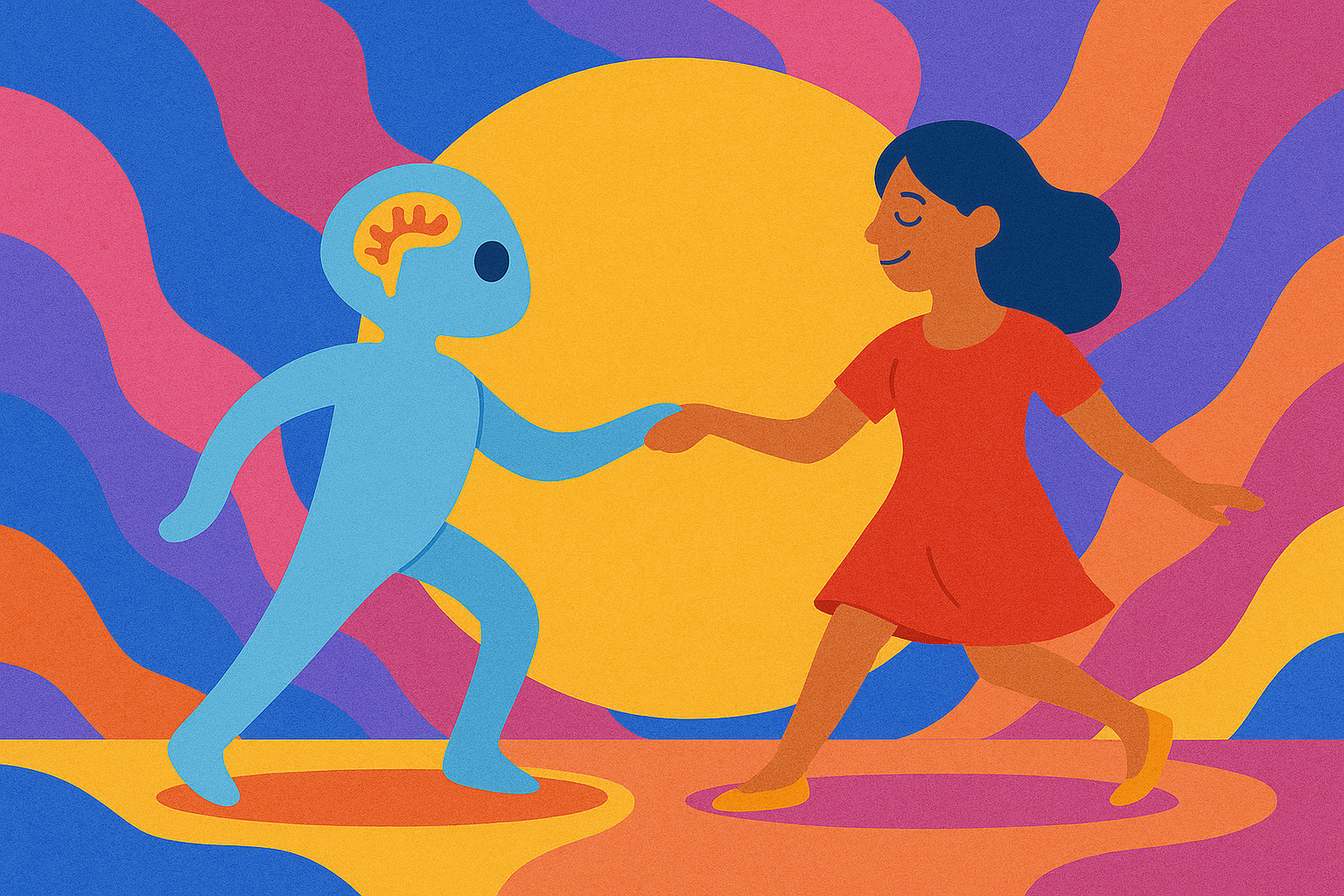
The small businesses that will thrive aren’t those that resist these tools or surrender completely to them. They’re the ones that learn to dance with AI—leveraging its speed and analytical power while maintaining human insight and judgment that no algorithm can replicate.
After 34 years in business, I've learned that successful entrepreneurs don’t just adapt to technological change—they anticipate it, embrace it strategically, and create competitive advantages. AI represents perhaps the most significant opportunity of our professional lifetimes.
The future belongs to businesses that harness AI’s power while remembering that behind every successful venture, there’s still a hard-working human making the crucial decisions.
— Chuck Morris
(This article originally appeared in the October 2025 issue of Everything Knoxville)