
Advertising has one job: put your name in front of a stranger and make it worth their while. That's the entire industry, stripped down. Everything else, the billboard, the banner ad, the fifteen second video, is just the delivery method for that one job.
What's changed isn't the goal. It's the terrain. A driver on Interstate 40 has their whole commute. A person on their phone has a scroll, and they're gone in under two seconds if the message doesn't land. Same job, two different clocks, and most Knoxville businesses are running strategy for only one of them.
Advertising vs. Digital Advertising: Two Systems, Not Two Eras
Traditional advertising, billboards, print, broadcast, sells space and repeats it. You buy a location and a stretch of time, and the ad works the same way every single time someone passes it. Forty commutes a month past the same billboard does the job a single impression never could: it turns a name into something familiar before a customer ever needs what you sell.
Digital advertising, paid social, search, display, sells targeting instead of repetition. You're not buying a fixed audience that happens to drive a certain road. You're buying the ability to put a specific message in front of a specific person at the moment they're already looking for it, and you pay for that precision on a per impression basis instead of a flat rate.
These aren't two stages of the same industry, with one replacing the other. They're two different systems solving two different problems: presence over time versus precision in the moment. A business running only one is leaving half the job undone.
The Numbers Behind the Scroll
Attention research is messy. Estimates vary widely depending on platform, format, and who's measuring, but the direction is consistent across nearly every study on the digital side: the window keeps shrinking, and the first few seconds decide everything.
A few data points worth sitting with:
Multiple attention tracking studies put the average look at a mobile ad at well under two seconds before someone decides to keep scrolling or stop.
Research on short form video consistently finds that most viewers decide whether to stay or leave within the first three seconds of any piece of content.
Short form video completion rates drop sharply once a clip runs past fifteen seconds, and keep dropping the longer it goes, a pattern that shows up across TikTok, Reels, and YouTube Shorts alike.
None of this means people have lost the ability to focus, probably. It means the cost of earning focus on a screen has gone up. Traditional advertising plays by a different, slower clock, where a billboard or a print ad gets repeated exposure over weeks instead of one shot in a scroll. But wherever the ad lives, the same principle holds: you rarely get a slow build anymore. You get an opening moment, and it has to work.
What Actually Stops the Scroll (and the Second Glance)
Across every format, traditional or digital, the pattern is the same: bold beats busy. Not louder, bolder. A blunt statement, one strong color, one clear idea, said once, said well.
Compare that to what actually clutters most local advertising, on a billboard or a banner: five value props crammed into one space, three colors competing for the same eye, a headline that hedges instead of commits. That's not restraint. That's noise wearing a suit.
A few examples worth studying, including some of our own:
T3 Vodka's billboard campaign leaned into one line, "The Spirit of Local," paired with a Knoxville skyline. No feature list. No fine print. One idea, stated with confidence, on a canvas built for a glance that lasts three seconds and repeats every day on the same drive.
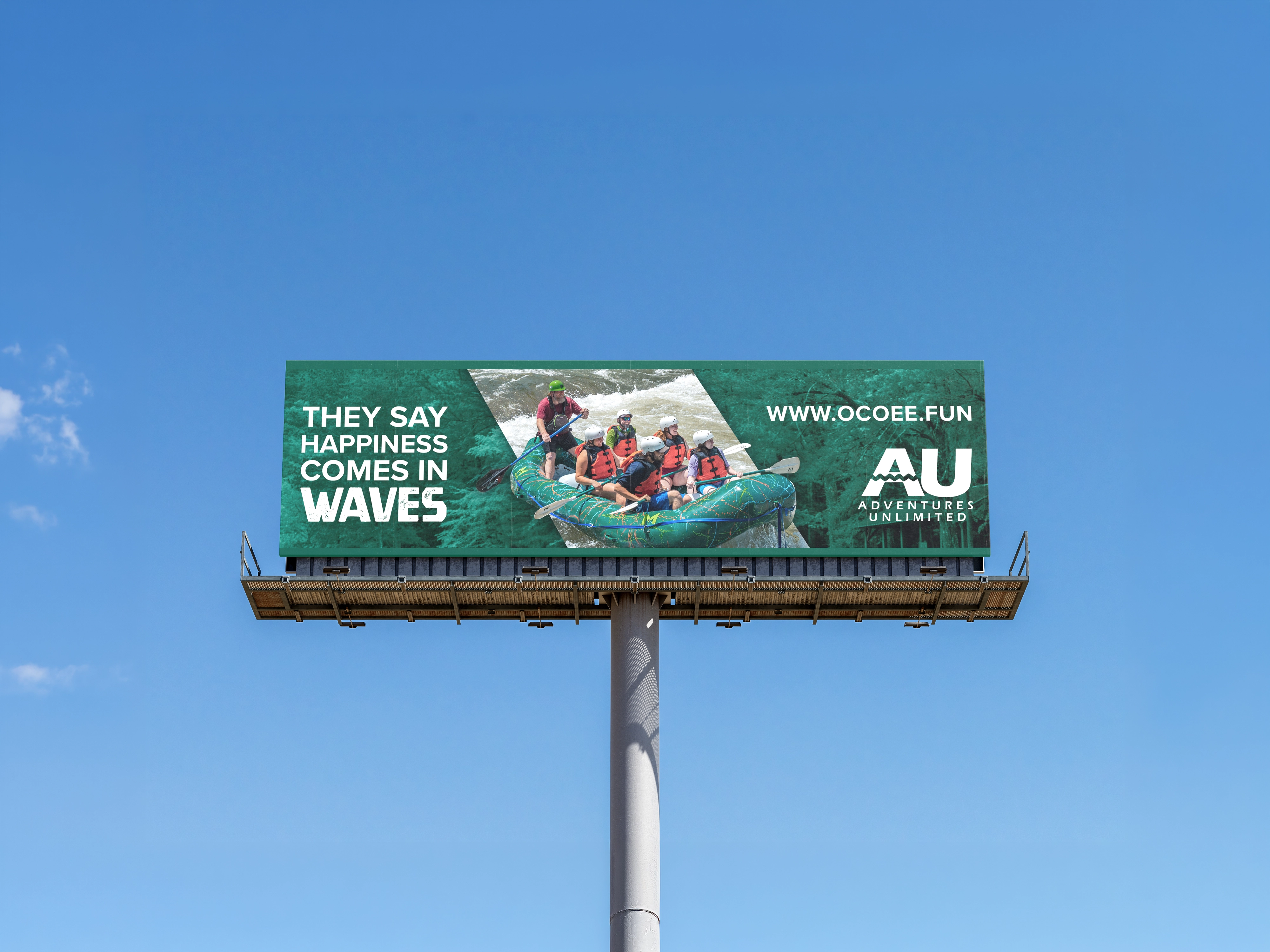
Adventures Unlimited's billboard work did the same thing with warmth instead of bravado: "They say happiness comes in waves." Seven words. One image. It doesn't try to sell rafting. It sells the feeling, and lets the reader fill in the rest, then earns repeat exposure every time someone drives past.
City Summit's ad campaign across Google and Meta shows the same principle at work in a pure digital environment, no highway involved at all. Rather than trying to describe every amenity of the downtown Knoxville condo development in one ad, the campaign built its targeting and creative around a single, specific audience: people already searching for urban living downtown, met with one clear message about the lifestyle on offer. Google Search caught the intent. Meta caught the interest. Neither had to work overtime explaining the whole project, because the message was narrow enough to land in the few seconds it actually had.
Different mediums, different strengths. A billboard earns its impact through consistency. A digital ad earns its impact through precision. Same rule underneath both: bold, simple, and built for the amount of attention you're actually going to get.
The Job Hasn't Changed. The Terrain Has.
Whether it's a billboard on the interstate or a paid ad in someone's feed, advertising has always had one job: earn a stranger's attention and make it worth their while. The medium changed. The math didn't. Traditional advertising still does what it's always done best, building familiarity and trust through steady, repeated presence. Digital advertising adds speed and precision on top of that. Used together, and used well, they cover each other's blind spots.
If your current advertising, billboard, digital, or both, is trying to say five things at once, it's probably saying none of them clearly. Start with one idea. Say it boldly, wherever it lives. Everything else is just delivery.